
Blog
Top 5 Beginner Steps to Improve Your Website's SEO
By Jono Slade · Published June 10, 2024 · Updated July 10, 2026
Improving your website’s SEO can feel daunting when you’re starting out, but a few fundamental moves make a real difference. These five steps help potential customers and search engines better understand your business, and none of them require an agency or a big budget.
1. Keyword Research
Keyword research is the foundation of any successful SEO strategy. At its simplest, it’s picking a list of words and phrases relevant to your business. Think about which words are most likely to get people to do what you want (visit your website and submit a form) and focus on those.
Find keywords
Keywords are the words or phrases searchers type to find things. Someone wanting a local ice cream shop might type “ice cream near me.” Make sure your keywords match the search intent of your target audience. They can be short (“digital marketing”) or long-tail (“how to create a good digital advertising campaign”).
Do the research
A dedicated keyword research tool helps a lot, but as a beginner you can start intuitively. If you sell roasted coffee, you might pick “roasted coffee,” “Colombian coffee,” and “local coffee roaster.”
Doing keyword research right helps you understand what your audience is searching for, tailor your content to them, and drive more traffic to your site. Here’s a video walkthrough if you’d rather watch than read.
2. Quality Content Creation
Creating quality content is the backbone of SEO for new websites. Every new page or blog post is another chance to show up in search.
Start with real research
To write high-quality content, understand the topic deeply. Thorough research helps you cover the subject fully without leaving out important information.
Write unique, up-to-date content
Don’t copy anyone else’s content, in part or in whole. Write from what you know. And revisit older posts: update them when things change, or delete them if they’re no longer relevant.
Make it easy to read
Write naturally, check spelling and grammar, break long content into sections, and use headings so readers can navigate.
Link your existing content together
If a new post relates to something you’ve already written, link to it. Internal links help readers discover related content and help search engines index and understand your pages.
3. On-Page SEO Optimization
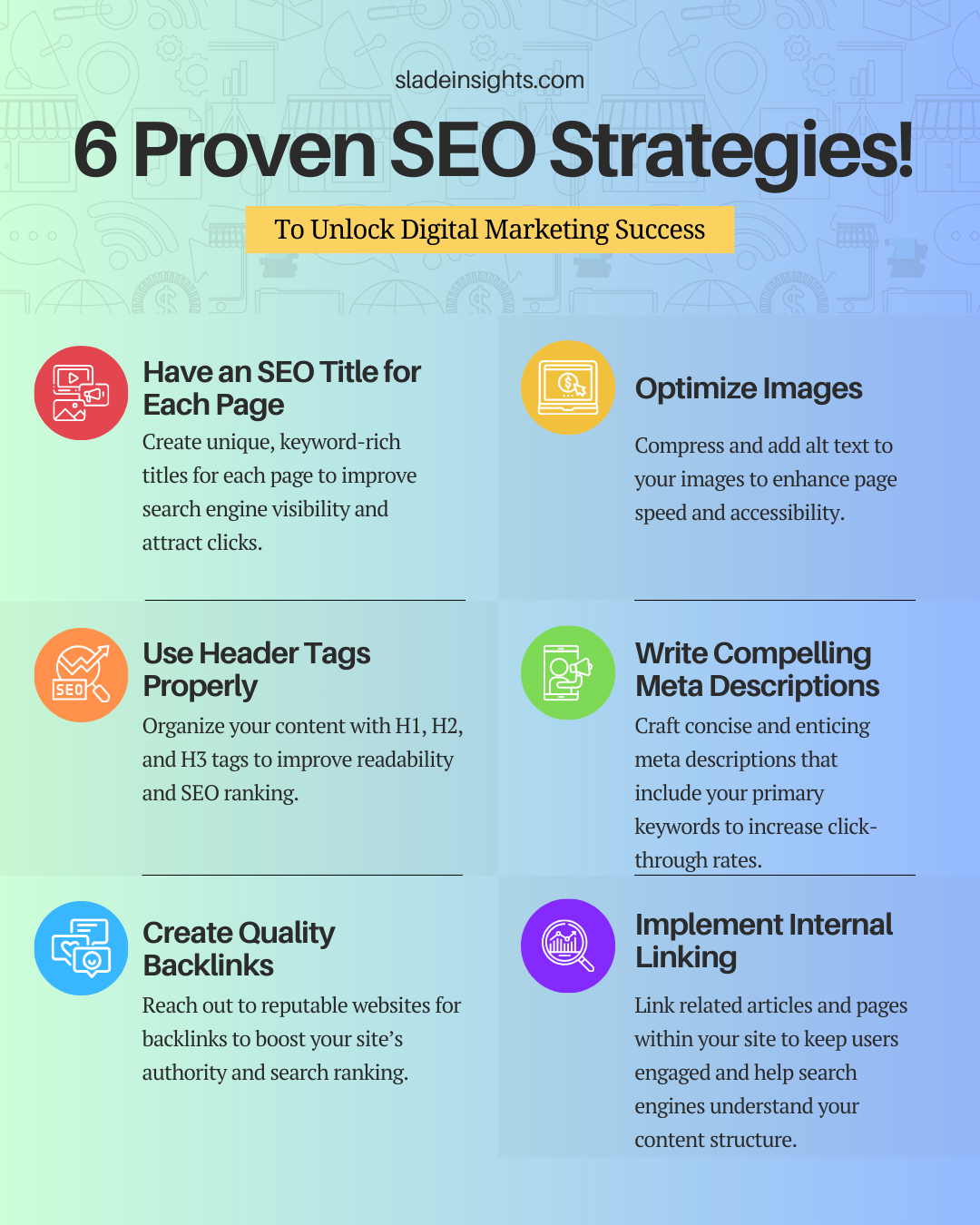
On-page SEO is about tuning the elements of each page so search engines understand it. The essentials:
- Write unique, high-quality content that matches search intent.
- Craft descriptive title tags that are brief and include your target keyword.
- Write engaging meta descriptions with relevant keywords to improve click-through rates.
- Add descriptive alt text to images for both SEO and accessibility.
- Keep your site structure clean with short, simple URLs and a clear hierarchy.
- Submit an XML sitemap to encourage search engines to index your site.
4. Off-Page SEO Strategies
Off-page SEO covers everything done outside your website to improve rankings. Backlinks are the backbone of it. The more reputable websites that link to you, the more trustworthy your site appears to search engines.
Link building
Focus on earning links from high-quality websites through guest blogging, partnerships, and creating content people want to share.
Social media engagement
Share your content, interact with followers, and join relevant discussions. It drives traffic and increases your visibility.
Local SEO
If you serve a local market, local SEO is your highest-leverage off-page work. Our step-by-step local SEO guide covers Google Business Profile, NAP consistency, local keywords, and local backlinks.
5. Mobile Optimization
Why it matters
Most people browse on their phones, and nobody stays on a site that’s broken on mobile: buttons that don’t work, sideways scrolling, text you have to pinch to read. A bad mobile experience means a high bounce rate, and Google indexes the mobile version of your site first.
Key steps
- Responsive design. Use a theme that adapts to phones, tablets, and desktops.
- Optimize title tags and meta descriptions for mobile search character limits.
- Avoid intrusive pop-ups. They’re especially annoying on phones.
Test it
Run your site through a mobile-friendliness test (Google’s Lighthouse tool in Chrome works well) to see how it performs on phones and what to fix. If your site needs more than a quick fix, we build responsive, conversion-focused websites for local businesses.
That’s the starter kit: pick the right keywords, publish genuinely useful content, tidy up your on-page basics, earn some links, and make sure everything works on a phone. Skip the shortcuts like keyword stuffing, work through these five steps, and your site will steadily become easier for both customers and search engines to find.
When you’re ready to go past the basics, our step-by-step local SEO guide walks the full playbook, and a fast, well-structured website makes every one of these tips work harder.
Frequently Asked Questions
What is SEO and why is it important?
SEO stands for Search Engine Optimization. It helps improve the visibility of your website on search engines, which can drive more traffic and potential customers to your site.
How do I start with keyword research?
Start by identifying the main topics relevant to your business. Use keyword research tools to find popular search terms related to those topics and check their search volume and competition.
What counts as quality content for SEO?
Quality content is informative, engaging, and relevant to your audience. It should provide value, be well written, and include relevant keywords naturally without keyword stuffing.
What are some on-page SEO techniques?
On-page SEO includes optimizing title tags, meta descriptions, header tags, and URL structures. It also involves internal linking and making sure your content is easy to read.
What is off-page SEO and why does it matter?
Off-page SEO covers actions taken outside your website to improve its ranking, like backlink building and social media marketing. It helps establish your site's authority and credibility.
How can I optimize my website for mobile users?
Use a responsive design, optimize page load speed, keep navigation simple, and make sure all content is accessible on mobile devices.
Ready to Stop Spinning Your Wheels?
You don't need to figure out SEO, reviews, or automation on your own. Let's build a digital foundation that attracts high-quality leads and turns them into paying customers.
Book Your Free Strategy Call →